
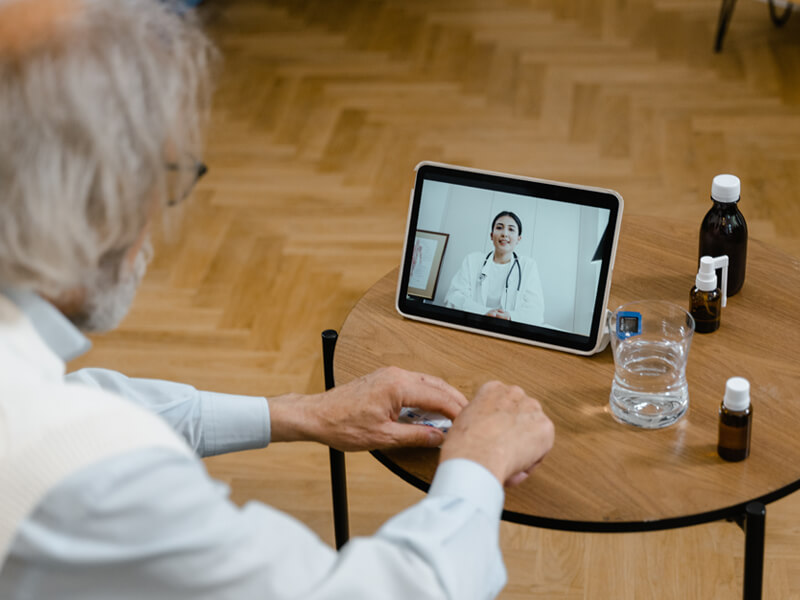
Telehealth is now a mainstream part of general practice in Australia — but it carries specific legal risks that differ from face-to-face care. Understanding the rules around MBS eligibility, prescribing, overseas patients, consent, and documentation is essential to practise safely and lawfully.
The rapid expansion of telehealth following the COVID-19 pandemic permanently changed Australian general practice. What was once an occasional supplement to in-person care is now a routine part of how millions of Australians access their GP. With that shift has come a new set of medico-legal risks that many practitioners are still navigating.
This guide does not cover the clinical limitations of telehealth — it focuses on the legal and regulatory obligations that apply specifically to telehealth consultations, and the areas where getting it wrong can result in billing compliance issues, AHPRA complaints, or patient harm.
The MBS Telehealth Framework: What You Need to Know
Medicare telehealth items have expanded significantly since 2020. GPs can now claim a range of telephone and video consultation items, including equivalent items to the standard Level A–D face-to-face consultations. However, the MBS telehealth framework comes with specific eligibility requirements that differ from face-to-face items.
Video vs Telephone: Not the Same
A common compliance error is treating telephone and video telehealth items interchangeably. They are not. Many MBS telehealth items require a video consultation — not just a telephone call. Claiming a video telehealth item for a telephone consultation is incorrect and will be identified in a Medicare audit.
Before claiming a telehealth item, confirm: (1) whether the item requires video or permits telephone; (2) whether the patient meets the eligibility requirements for that item; and (3) whether any bulk billing incentives you are claiming are consistent with the telehealth format.
The Existing Clinical Relationship Requirement
A key requirement that was introduced as telehealth became permanent is the need for an existing clinical relationship before certain telehealth items can be claimed. Under current MBS rules, a GP telehealth service generally requires that the patient has attended the practice in person within the previous 12 months — unless the patient is located in a rural or remote area, or other specific exemptions apply.
This means you generally cannot see a completely new patient for the first time via telehealth and claim a standard GP telehealth item. Exceptions exist for after-hours services, patients in areas with limited GP access, and patients in residential aged care facilities — check the current item descriptors at www.mbsonline.gov.au for the full conditions.
Common Billing Compliance Risk: Telehealth items are among the most scrutinised by Services Australia. The most common issues identified in audits include claiming video items for telephone consultations; claiming new patients without an existing clinical relationship; and incorrect use of bulk billing incentives. Review current MBS item descriptors before each new telehealth item you introduce into your practice.
Prescribing via Telehealth: The Legal Constraints
Prescribing during a telehealth consultation is one of the highest-risk activities in remote care. The absence of a physical examination removes a fundamental clinical tool — and this has both clinical and legal implications.
What You Can and Cannot Prescribe via Telehealth
There is no blanket prohibition on prescribing via telehealth for most medications. However, specific restrictions apply to controlled and high-risk medications:
- Schedule 8 medications: Initiating a new course of S8 prescribing for a patient you have never physically examined is high-risk and likely to attract scrutiny. Continuing established S8 prescribing for a known patient via telehealth is generally permissible, subject to state-based rules and real-time monitoring requirements.
- Benzodiazepines: Similar caution applies. State-based rules around S8 prescribing apply regardless of consultation modality.
- Medical cannabis: Specific rules apply to telehealth prescribing of medicinal cannabis products — check TGA guidance and state requirements.
- Antibiotics and general medications: Generally no specific restriction on telehealth prescribing, but your standard of care obligations remain — you must be satisfied that prescribing is clinically appropriate based on the information available.
The Standard of Care in Telehealth Prescribing
The key medico-legal principle is this: prescribing via telehealth does not lower your standard of care obligations. If a face-to-face consultation would be required to safely assess and prescribe for a particular condition, a telehealth consultation does not substitute for that assessment.
A GP who prescribes an antibiotic for a suspected chest infection without being able to auscultate the patient’s chest takes a different clinical and legal risk than one who does so after a proper in-person examination. This does not mean telehealth prescribing is wrong — it means the clinical judgment about whether remote assessment is adequate must be made carefully and documented.
Clinical Scenario: The Remote Prescription – Dr Singh receives a telehealth request from Mr Okonkwo, a regular patient he has seen twice in the past year. Mr Okonkwo reports tooth pain and requests an antibiotic. Dr Singh has never physically examined a dental complaint for this patient and cannot examine the oral cavity via video. The legal and clinical question: Is the clinical information available via telehealth sufficient to safely prescribe? Dr Singh should consider whether he can obtain sufficient clinical history, whether there are any red flags requiring in-person review, whether his clinical reasoning is documented, and whether referring to a dentist is more appropriate. If he prescribes, his notes should clearly record the clinical basis for doing so via telehealth rather than requiring an in-person review.
Seeing Overseas Patients via Telehealth
The question of whether an Australian GP can consult with a patient who is overseas at the time of the consultation is one of the most legally complex issues in telehealth. The short answer is: it depends — and the risks are significant.
Registration and Jurisdiction
Australian medical registration under AHPRA generally entitles you to practise medicine in Australia. It does not automatically authorise you to provide medical services to patients who are physically located in another country, which may require registration in that country.
If you consult with a patient who is currently overseas — even if they are your regular patient temporarily abroad — you may technically be practising medicine in the jurisdiction where the patient is located. Many countries regulate telemedicine from foreign practitioners. The consequences of providing telehealth services without appropriate overseas registration range from regulatory action by the foreign jurisdiction to criminal charges in some countries.
MBS and Overseas Patients
From a Medicare perspective, telehealth items generally require the patient to be in Australia at the time of the service. A patient who is overseas when the consultation occurs is unlikely to be eligible for a Medicare benefit — meaning claiming a Medicare item for that service would be incorrect.
Practical Guidance
Before consulting with a patient who advises they are overseas:
- Clarify where the patient is physically located
- Advise the patient that you can only provide Medicare-funded telehealth services when they are in Australia
- Consider whether a private (non-Medicare) consultation is appropriate — noting the overseas registration concerns above
- If the consultation is urgent and clinically necessary, document the circumstances carefully
- Seek advice from your medico-legal insurer if you are uncertain
Consent for Telehealth Consultations
Patients should understand that they are having a telehealth consultation — including the format (phone vs video) and the limitations that entails. While a formal written consent process is not generally required for routine telehealth consultations, good practice includes:
- Informing the patient at the start of the consultation that it is being conducted via telehealth
- Explaining the limitations of the format — particularly where a physical examination would normally form part of the clinical assessment
- Offering an in-person appointment if the patient prefers, or if the clinical situation requires it
- Recording in the notes that the consultation was conducted via telehealth and that the patient was aware of this
For significant clinical decisions made via telehealth — such as a major new diagnosis, initiation of a significant treatment, or a clinical assessment with significant limitations due to the remote format — a more explicit consent discussion is appropriate and should be documented.
Documentation Requirements for Telehealth
Your documentation obligations for telehealth consultations are the same as for face-to-face consultations — but there are additional elements to record:
- Note that the consultation was conducted via telehealth (and specify video or telephone)
- Record the patient’s location at the time of the consultation (particularly relevant for MBS item eligibility and overseas patient issues)
- Note any clinical limitations arising from the remote format — for example, ‘unable to examine chest; patient advised in-person review required if symptoms persist’
- For S8 prescribing: record the RTPM check result, as you would for a face-to-face consultation
- Record any referrals made for follow-up in-person assessment
In a complaint or legal claim arising from a telehealth consultation, the adequacy of your clinical documentation — including your reasoning for managing the patient remotely rather than insisting on an in-person review — will be central to the assessment of your conduct.
Privacy and Security Obligations in Telehealth
Telehealth consultations involve the collection, use, and transmission of health information — all of which are subject to the Privacy Act 1988 (Cth) and applicable state health privacy legislation. Specific obligations include:
- Using a telehealth platform that meets appropriate security and privacy standards — consumer video products (such as standard FaceTime or Zoom consumer accounts) may not be appropriate for clinical consultations
- Ensuring the patient has privacy on their end — a clinical consultation conducted in a public place or with others present raises confidentiality concerns
- Storing records of telehealth consultations with the same security as other clinical records
- Being aware that recordings of consultations may occur — and that recording a medical consultation without consent may breach both privacy law and the patient’s rights
The RACGP has published guidance on appropriate telehealth platforms and security standards. Refer to the RACGP Telehealth Guidelines at www.racgp.org.au for current recommendations.
After-Hours Telehealth: Additional Considerations
After-hours telehealth services attract specific MBS items with their own eligibility criteria. A key requirement for after-hours telehealth items is that the service must be clinically necessary — that is, the patient’s condition required management at that time and could not reasonably have waited until the next available appointment.
After-hours telehealth items are among the most audited by Services Australia. Practices with disproportionately high rates of after-hours telehealth claims relative to peers will attract scrutiny. Ensure your after-hours telehealth is genuinely clinically indicated and documented accordingly.
Frequently Asked Questions
Q: Can I refuse to see a patient via telehealth and insist on an in-person visit?
Yes. You can make a clinical judgment that a particular presentation requires an in-person assessment. This is a legitimate clinical decision that protects both you and the patient. Document the basis for that decision.
Q: A patient is on a cruise ship in international waters — can I consult with them via telehealth?
This is an unusual situation that requires careful thought. International waters do not have a single jurisdiction, but the ship may be registered in a particular country. For a routine matter, advise the patient to seek care through the ship’s medical officer. For urgent matters, provide what clinical assistance you can and document the emergency circumstances. Seek advice from your indemnity insurer.
Q: Can I use WhatsApp or FaceTime for telehealth consultations?
Consumer-grade communication platforms raise legitimate security and privacy concerns for clinical consultations. They may not meet the encryption and data storage standards required under Australian health privacy law. Use a platform that has been designed for, or validated for use in, clinical telehealth.
Q: Do I need to keep records differently for telehealth?
Not fundamentally differently — but you must include telehealth-specific information: the modality (video or telephone), the patient’s location, clinical limitations of the format, and your clinical reasoning for managing the matter remotely. Standard record-keeping obligations apply in full.
Q: What if a patient has a medical emergency during a telehealth consultation?
If you become aware of a medical emergency during a telehealth consultation, your duty of care does not stop because the consultation is remote. You should direct the patient or those with them to call 000 immediately, provide appropriate guidance while emergency services are contacted, document the circumstances in full, and notify your indemnity insurer.